In Conversation: Lola Flash and Kevin Moore
Posted on April 23, 2026
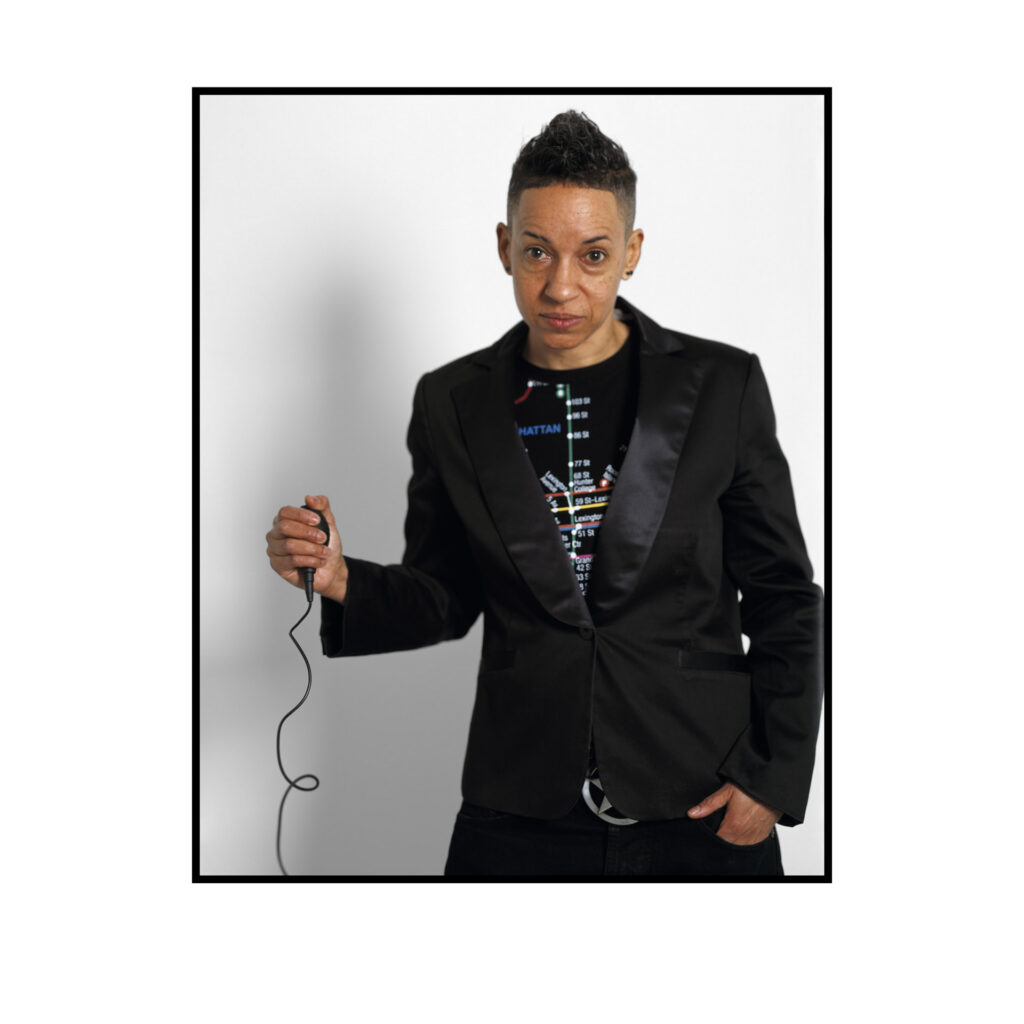
FotoFocus Artistic Director and Curator, Kevin Moore, met with photographer and activist Lola Flash over Zoom for a brief conversation earlier this month. Flash will visit the Cincinnati Art Museum (CAM) May 3 to celebrate the recent addition of their work at the museum. In the following conversation, they discuss Flash’s experience in New York in the 1980s and 1990s, as well as several of Flash’s projects, including syzygy, the vision. Read on to find out more.
For more than 40 years, photographer Lola Flash’s art and activism have been deeply intertwined, fueling a lifelong commitment to visibility and preserving the legacy of LGBTQIA+ and POC communities worldwide. Flash’s work has consistently challenged preconceptions around gender, sexuality, race, and age, ranging from early Cross-Color images that portray the intersections of personal life and activism in the 1980s and 1990s, to more recent work that uses portraiture to create positive representations of marginalized or overlooked individuals and communities. Their work is represented in the permanent collections of institutions including The Museum of Modern Art, the Whitney Museum of American Art, the Brooklyn Museum, the National Museum of African American History and Culture, the George Eastman Museum, the Victoria and Albert Museum, and now the Cincinnati Art Museum.
As part of the CAM Presents series, Flash will speak at the Cincinnati Art Museum on Sunday, May 3, 2026, 3–5pm. This event is free, but reservations are required. Following the main program in Fath Auditorium, there will be a reception in the Marek-Weaver Family Commons.
Flash has participated in past FotoFocus programming, including the 2022 and 2024 Biennials. Their work entitled Amy, Hoboken, NJ will be on view at FotoFocus Center during the inaugural exhibition, Big Tent, opening May 29.
In Conversation: Lola Flash and Kevin Moore
Kevin Moore: Tell me about your experience of New York in the 1980s and the 1990s. You have said of that period that you were at all the parties and funerals. So what was it like?
Lola Flash: That’s a good quote. Where did I say that at?
KM: I don’t know. I found it on a MoMA website.
LF: Okay. All right. It’s very true. Yeah, it was a really trying time. I actually spoke at a friend of mine’s class at NYU recently. During the Q&A period, this young man asked me, how did I… He basically was asking me, how have I dealt with all of that death? It took me by surprise because I suppose in some ways I didn’t really know how to answer that question. Because I thought to myself, have I really dealt with it? I know when my parents died, I thought I was an expert at death, but it’s very different for… The death of your parents is really different.
KM: You’re at different ages, too, I think. When you’re 20, or in your 50s or 60s.
LF: Yeah. And I often talk about how my grandmother was going to as many funerals as I was during that time. I said to the kid, I think maybe through my work I was able to work through it. But yeah, it was a really… I’m glad that I got here, got to New York at the beginning of ACT UP. The East Village was buzzing. RuPaul moved up to New York around the same time. We were all in Atlanta and he moved up here around the same time. So it was a really exciting, creative time, before things got so expensive that you couldn’t afford stuff.
It was, I think, a time that some of the young people wished that they were there for. When I go to The Whitney, I get all these, I don’t know, ghosts and sounds of different favorite songs, like She’s Homeless. That was one of my favorite songs I used to dance to at the Clit Club. So I’m really happy that I had my friends in ACT UP, and then also the crew. Some of them were in ACT UP, but the crew that was at the Clit Club, and also MEAT, which was the guys’ club that Aldo Hernandez ran. I think the word community sometimes is used too much, just like archive, but it definitely was a community that supported me and helped me get through that period. It was sad, but it was also very empowering. A lot of people talk about the Club being like the church, and it definitely did feel like this sanctuary where we could just, I don’t know, dance the pain away.
I had always wished that I had been old enough to be an activist during the civil rights movement, the Vietnam War, or even the feminist movement. So ACT UP, the AIDS crisis gave me the opportunity to be an activist. And it’s amazing to see how much work that we did that still is living today, even though so many people aren’t living now. I’m thinking about the housing and medicine. It’s really empowering. To be honest with you, I feel like if a lot of the people who are marching now were marching back then, we wouldn’t be in the situation we are in right now. But it’s human nature. When it affects you, then you start doing something about it. I hope that things will change, but I think that’s human nature.
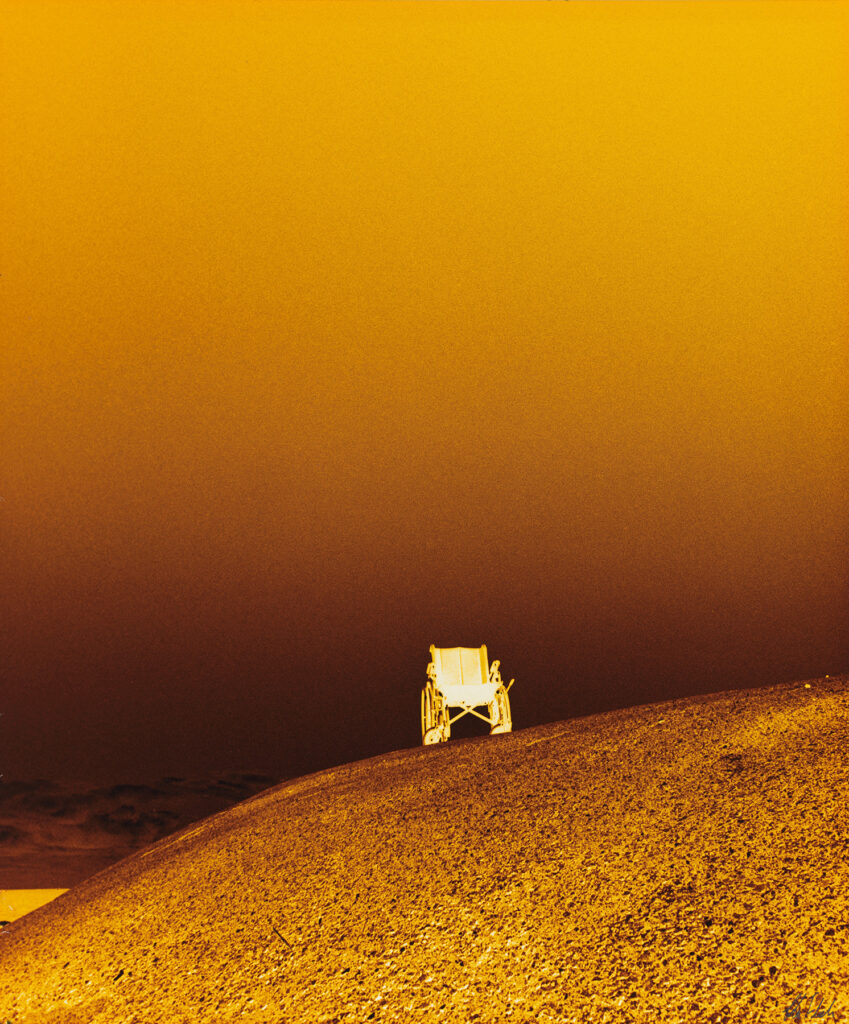
KM: Let’s talk about your photographs during that period. You were using this process called cross-color, which had to do with slide film processing that created a psychedelic look. Or, it was unnatural looking. How would you describe that process, what that process is, and the nuances for the collaborators you were photographing at that time?
LF: Back then, there was this Kodak commercial that described something like a perfect Kodak day. They showed a family with little blond children. You might be old enough to remember that commercial. And I think a dog was running after the little girl, and there’s a blue sky, and everyone looked so happy. I knew from that, from when I was a kid, to me, that wasn’t my idea of a beautiful Kodak day.
So, the cross-color was a total mistake. It’s interesting because here I come up with this weird color work and my teachers were like, “What are you doing?” I was basically flipping the script. I was making Black people white, white people Black. And then as I continued, I realized I can make people purple, blue, and green and all these other colors. And so it removed this binary idea around race.
I was talking to Jim Ganz at the Getty recently and he was saying that Man Ray, whom I love–I love all the surrealists, really–Man Ray made these rayographs, and Jim’s like, “Look at my rayographs.” Everyone’s like, “Oh, rayographs!” I think he called them rayograms or rayographs.
KM: Graphs. Yeah, Man Ray branded it. And you were doing Lola-graphs.
LF: Right? And so Jim was saying, Man Ray did that and everyone was applauding it. “Look at his rayographs.” And here I was making something new and people were doubting it. They were just like, “What’s that weird color all about?” I thought it was interesting. I always was thinking about the fact that during that time there were no digital cameras, there were no computers, there was no Photoshop. And I feel that even now. Black and white still seems to have this hold on photography, although there were lots of great people then doing great color work. But I think people weren’t quite ready for it. The world wasn’t quite ready for a Black girl doing something different.
KM: I would say until fairly recently, there’s not really been much acceptance of anything that doesn’t look naturalistic. Of course, throughout photography’s history, there’s been collage and montage and all kinds of messing around with the processes, but there’s been a very long modernist stronghold on photography as something sharp, documentary, not manipulated. And I think especially when digital came in, there was even more of a resistance to that.
LF: Yeah. And now we have AI. I’ve had a few people say, “Is that AI?” And I feel like slapping them.
Now that I’m no longer doing the cross-color work, I love working with my 4×5. I just got five packs of 4×5 film. I don’t know if you know, but it’s really hard to get 4×5 slide film nowadays. They’re just not stocking it. They’re still making it. So I ordered five boxes from Adorama in June and I just got it delivered, beginning of this month. So I’m super excited.
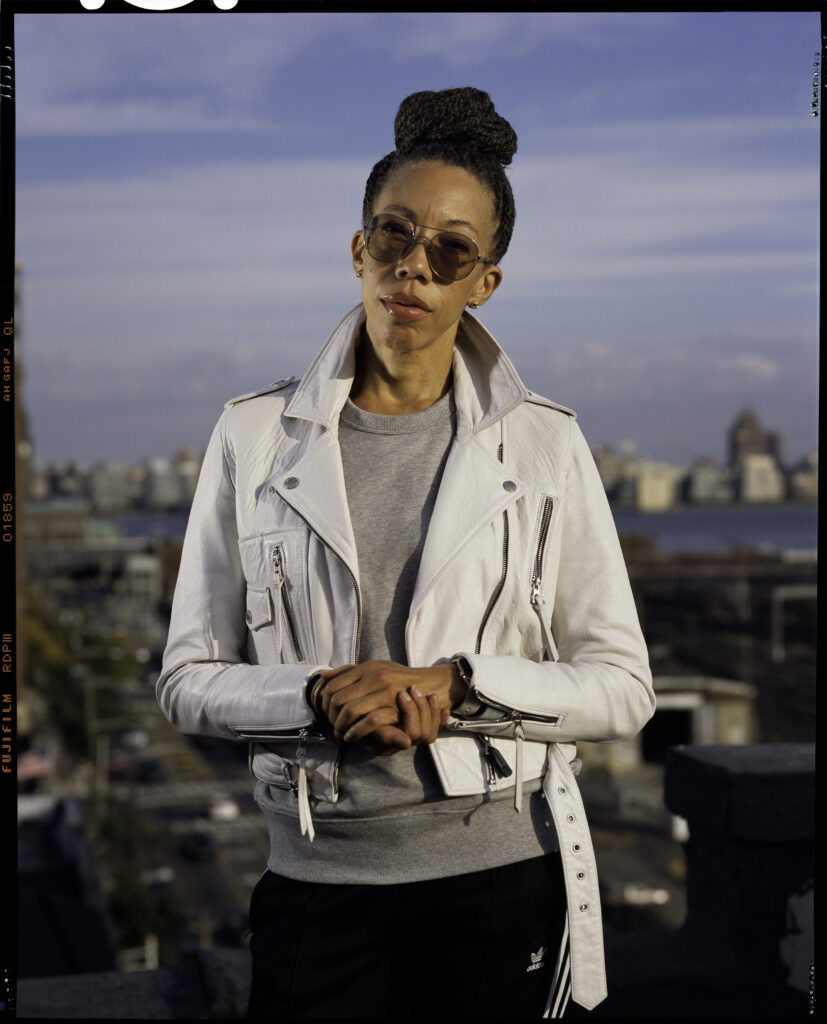
Yeah, I’m a classical photographer. The photograph of Amy [Sherald] is a perfect example of using the 4×5 to make a classic portrait using the tropes of the Italian painters who used to paint from these high vistas, but I’m bringing it into an urban landscape.
KM: Let’s talk about this return to classical portraiture. You’ve done a series called Salt, which is making women over 70 visible. The Amy Sherald portrait is from a series called [sur]passing, about trailblazers in the LGBTQ+ community.
LF: You might be thinking about Legends. That series is more about trailblazers. [sur]passing is actually more about skin color, “pigmentocracy,” as some people call it. I’ve made pretty much a scale from light-skinned to dark-skinned people and everyone in between to talk about this idea of color and how color still plays a part in the way that we are viewed. And I always talk about Obama when I think about this [sur]passing series, because if he had been a darker-skinned man, I don’t think that he would’ve been elected.
Back to the portraits, that’s why they’re on high vistas, because I envision them as characters in a Shakespeare play. They are noble. And I feel the 4×5 camera–especially the more and more that we take selfies–the 4×5 camera, when you see that staring at you, you stand up straight and you look proud.
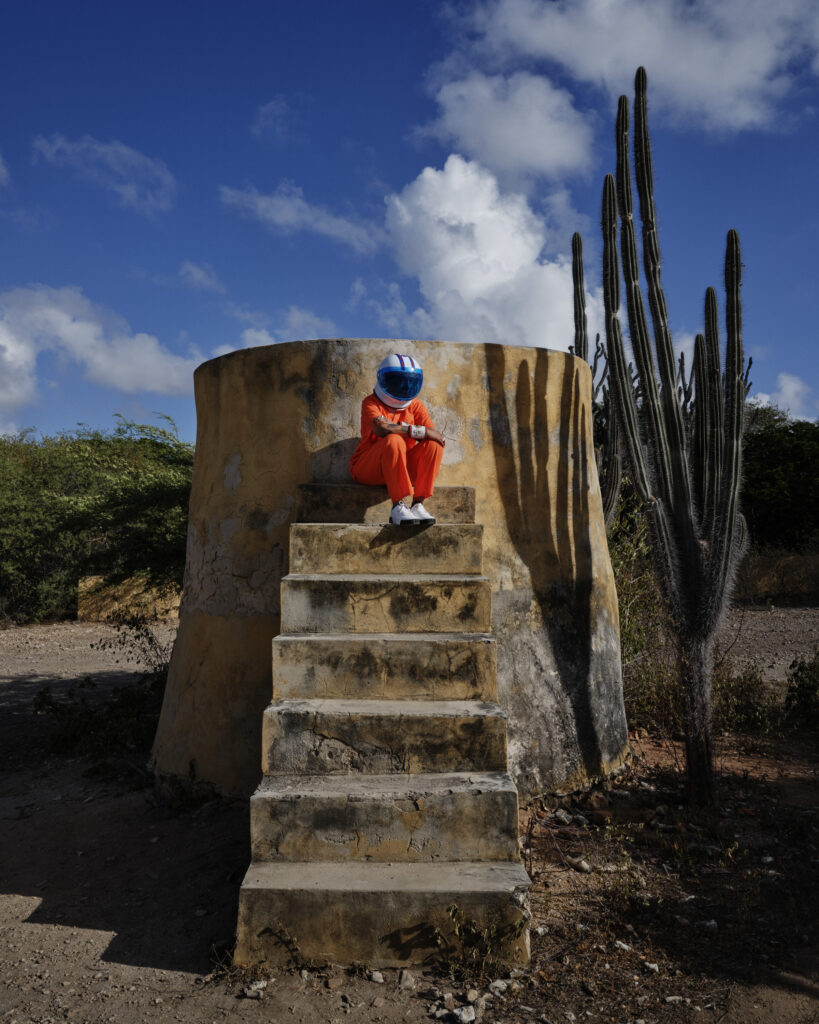
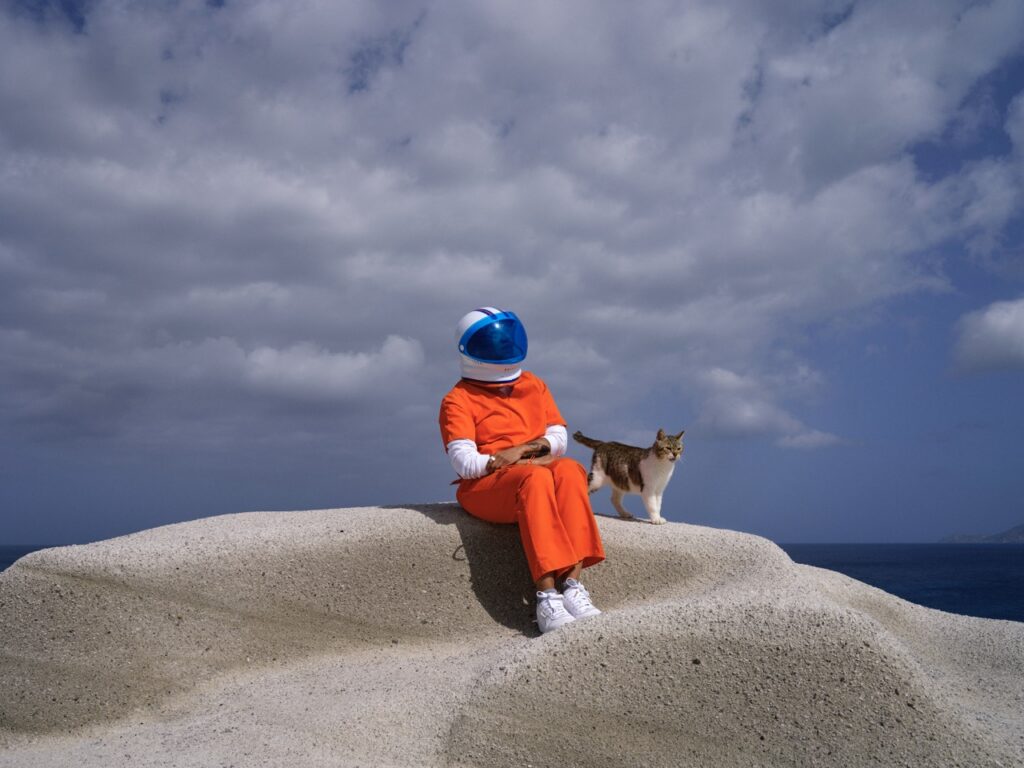
KM: Okay, tell me about this series–I’m going to butcher the pronunciation–called syzygy, the vision, the series where you dress up in a prisoner’s orange jumpsuit and have an astronaut’s helmet, and you photograph yourself in different sites of some significance. I think I saw you in this outfit one time in Miami.
LF: Oh, yes. At the Pérez Museum.
KM: Right. Talk about the series a little bit? It kind of gives me Little Prince vibes, of this lonely figure trying to, I don’t know, understand better the injustices of the world, or something like that.
LF: Yeah, it’s funny that you say Little Prince because the photograph that I made in Senegal with the baobab tree, it’s actually entitled Little Prince. Because there’s a baobab tree in that book. Yeah, syzygy uses Afrofuturism as a way to lay the story out, thinking about past, present, and future. The actual word “syzygy” means the alignment of three planets, suggesting a sequence: past, present, and future. In many ways, syzygy drops me down from a planet and I memorialize these places, remembering those people that were there, my ancestors. And sometimes I think about the sadness that happened when I went to the Door of No Return [a monument to slavery in Africa]. That was definitely very heavy.
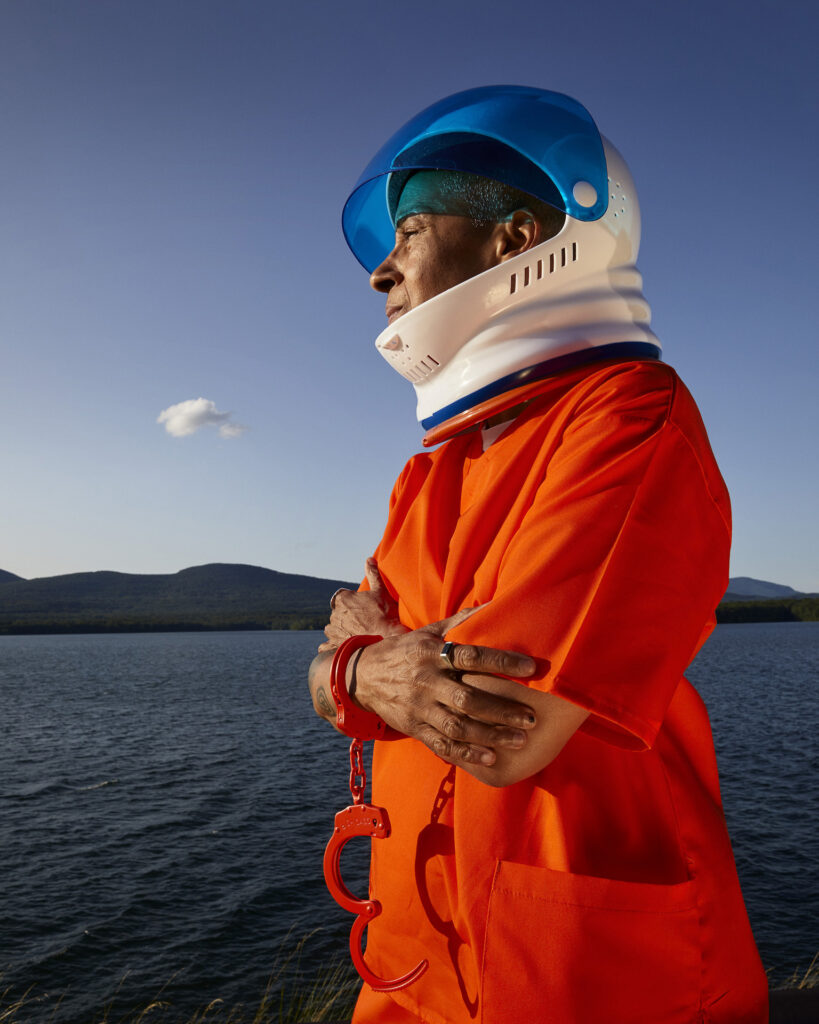
KM: The sites are significant sites of African American history, right?
LF: Yeah, yeah. I go to different sites. In Tulsa, I went to Greenwood, where the massacre happened. I choose places that are historically known for a lot of trauma, but then sometimes they’re random places.
KM: Some of the photos are homages to people, like George Floyd? I feel like that’s when you really got started with this series, right, during COVID and Black Lives Matter?
LF: That’s right. Going back in my own personal history, police violence and brutality has always been happening. I’ve been aware of it since I was a kid, when my cousins would be late to Thanksgiving dinner, and it’s because they had been picked up because they looked like someone who had done something wrong. And then in 2008, I was actually arrested, I like to say for walking while Black. And I was in jail. They put me in a couple different jails and my teaching license was suspended and I went into debt. I had always been thinking about doing a series of portraits in jail.
So when the opportunity came for me to do something around Afrofuturism, I immediately thought, “Okay, the helmet speaks to the future, the prison uniform speaks to the present, thinking about all the people in prison in America who are incarcerated, who look like me.” Sometimes I have handcuffs on, opened or closed. I thought that was a good reference to lack of freedom.
It’s the first time I’ve delved into conceptual work. I really did not think I would ever do conceptual work. The conceptual work that I’ve seen, a lot of times I feel like it’s too multilayered and that the average person who goes to a museum doesn’t understand it. I’ve got a couple of master’s degrees and I don’t understand it. And I think that for me, art should be open to interpretation, but it shouldn’t make people feel less than. I have friends who aren’t artists, who, even today, feel uncomfortable going to museums because they don’t understand. It could be because I was a teacher for such a long time, but I’d like for people to learn from my work rather than to be put off by it.
Sometimes I think about comedians, particularly Whoopi Goldberg. When she first started, I remember, she would get the audience laughing and then she would say something like [gestures dramatically]. It was almost like a dagger, and then you’re like, “Whoops, that’s not too funny.” So I think with the cross-color and with the syzygy series, the color is quite vibrant, but often what I’m talking about is not vibrant.
But on top of that, my real joy of doing the series is to really talk about the ingenuity that my ancestors had. Although we were victims, we didn’t become victimized. We’re like, “Massa’s not going to always be controlling us. We’re going to get out of this slavery.” And between the braids, where they made maps in the braids, or the quilts, or the drumming, and all those other ways my ancestors were able to create, we were able to finally get out of slavery, of being enslaved. If I think about it hard enough, my great-grandfather, his parents were slaves. They were enslaved.
KM: Not so long ago.
LF: Yeah, that’s what I’m talking about. And so even when I think about…this is going a little off the subject, but I photographed these women for Smithsonian, some of the women like Ms. [Ruby] Bridges, who integrated the schools. Whenever there’s a crusade, there’s always one or two people and everyone knows their names, but then there’s always 100 or more people that were actually doing the same thing, but they just didn’t get the notoriety. And so these women were brave enough to go to these schools and integrate. Some of them when they were really young, and their parents lost their jobs and all, but the parents were behind them. But I started thinking, “Wow, if those ladies didn’t do that, then I might not be wonderful.” First of all, I might not be sitting here talking to you and I might not have three degrees. So it is really like, what I like to say, “it’s his story, but it’s not my story.” That’s my favorite new catchline.