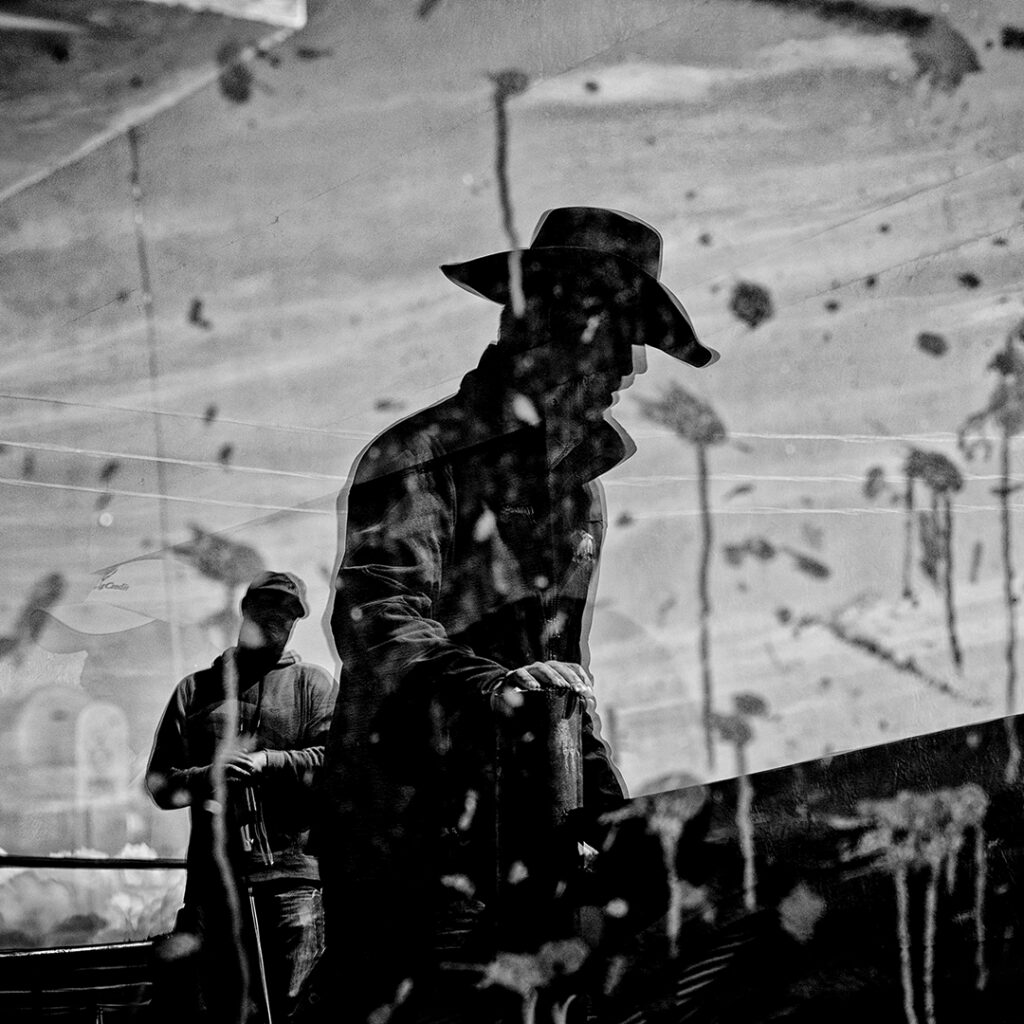
In Conversation: Matt Black and Kevin Moore
Posted on March 19, 2026
FotoFocus Artistic Director and Curator, Kevin Moore, met with Photographer Matt Black over Zoom for a brief conversation prior to the upcoming FotoFocus Lecture and Visiting Artist series on March 26. In the following conversation, they discuss how Black became interested in photography, his process for creating photo essays, and his involvement in Magnum. Read on to find out more.
Matt Black is a world renowned photographer whose work has explored the intersecting subjects of poverty, migration, and environmental destruction. His distinctive, long-form approach to photojournalism sees him spend years working with communities and in landscapes transformed by social and economic decay, creating pictures and gathering ephemera that attest to the varied and multi-textured nature of material life. For his Spring Lecture, Black will reconsider several of his most important projects such as Mixteca, The Central Valley, and American Geography, tracing the historical lineage of social documentary that informs them.
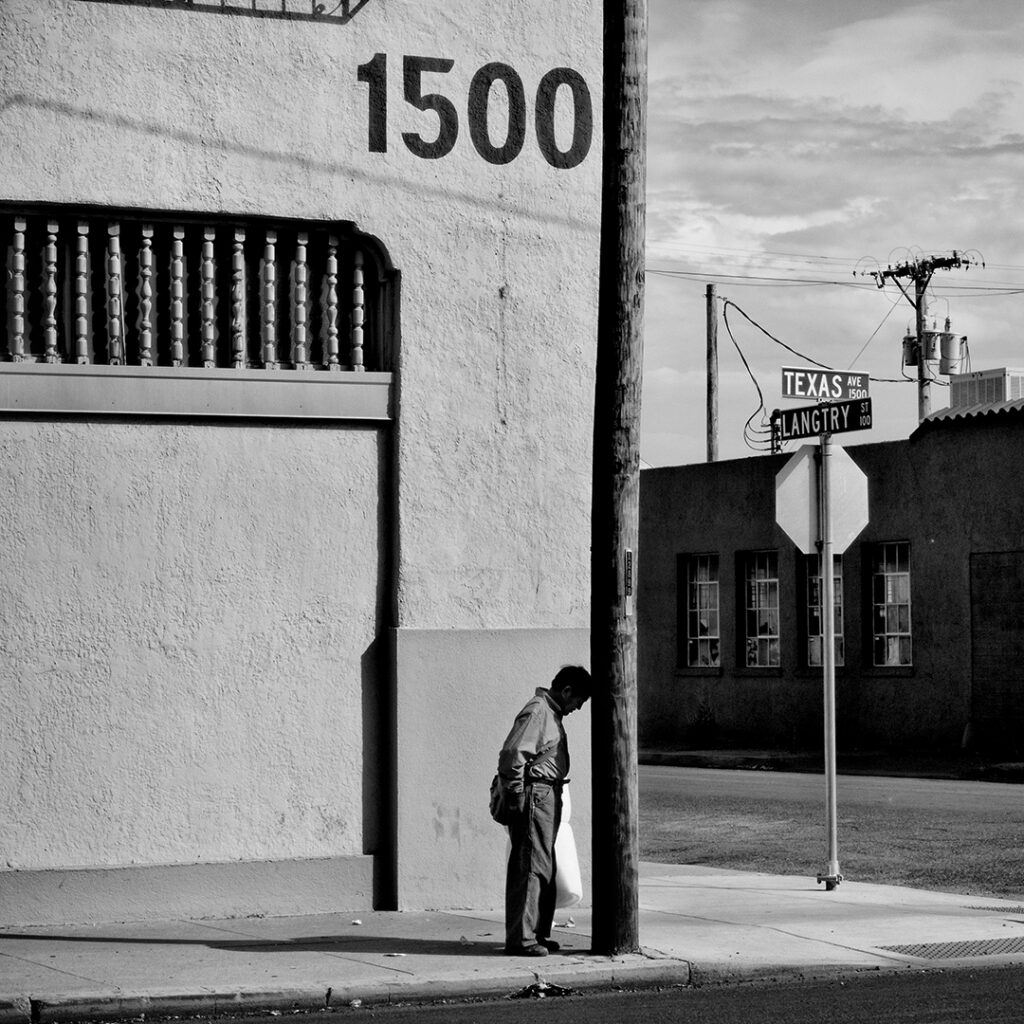
American Geography, published in 2021, was the result of Black photographing throughout the United States between 2014 and 2020. Traveling from his hometown in California’s Central Valley to hundreds of other communities of high poverty across the United States, Black concentrated on cities, towns, and counties with poverty rates above 20%, discovering that he could travel from coast to coast without ever crossing above the poverty line. His exploration of this stark American reality grew to cover over 100,000 miles and 46 states, spread across five cross-country trips. In 2024, Black published American Artifacts, a companion volume that presents photographs of the humble, discarded objects that he collected during his cross-country travels that form a portrait of America assembled from its roadways and sidewalks, a kind of archaeology of dispossession.
Join us on March 26 at 6:30pm for the 2026 Lecture and Visiting Artist Series with Matt Black. Taking place at the Cincinnati Art Museum Fath Auditorium, this event is free and open to the public. A reception will follow in the Marek-Weaver Family Commons.
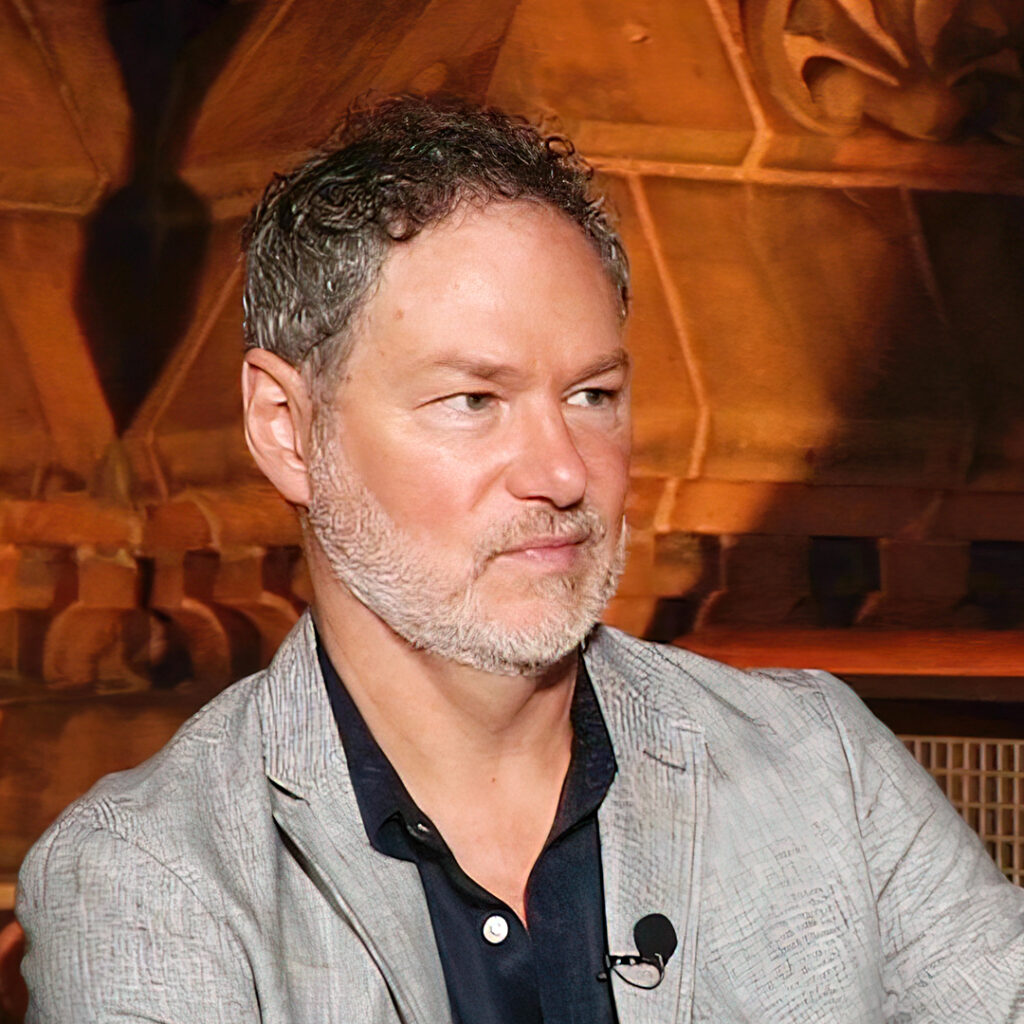
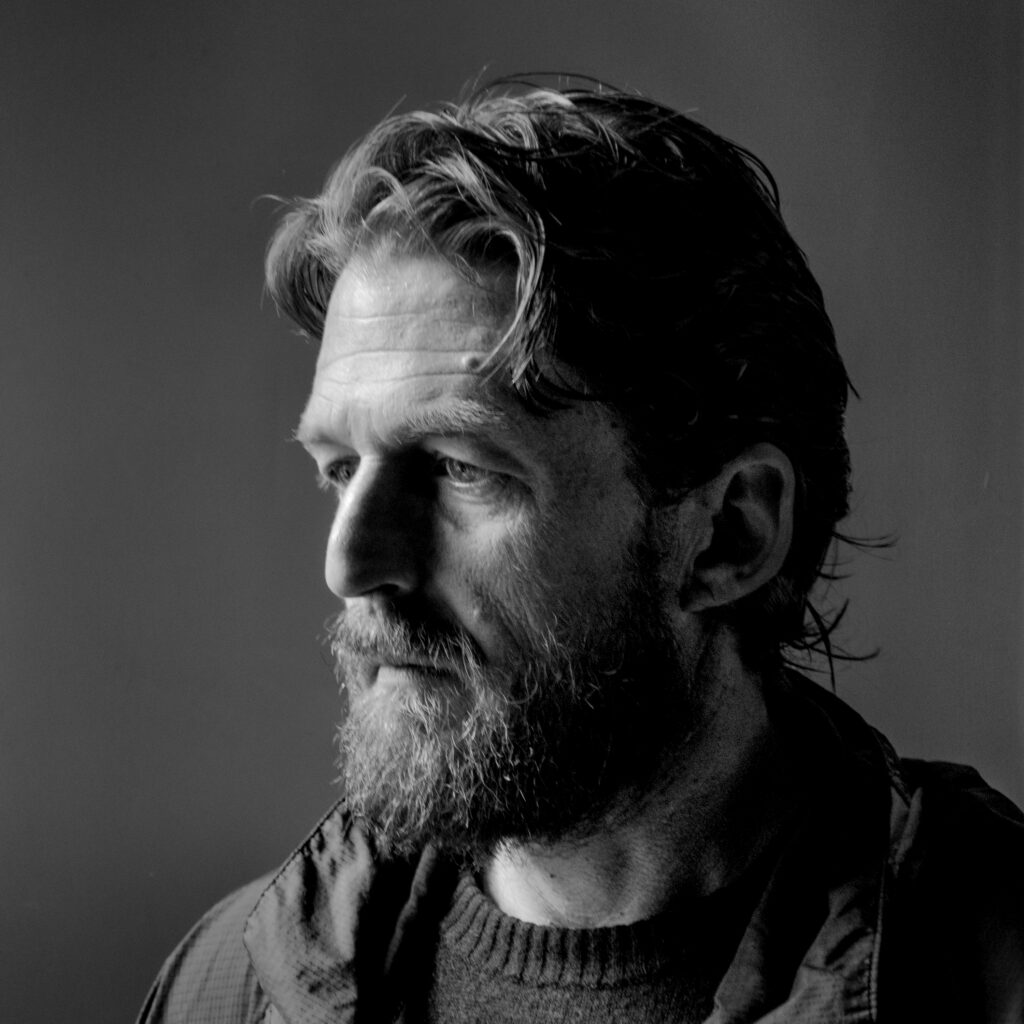
In Conversation: Matt Black and Kevin Moore
Kevin Moore: Matt, how did you come to photography? Did you come straight to it? Was it something you were always interested in?
Matt Black: Yeah. It’s something I’ve always been interested in. I started very young in my teenage years and started working right away, actually, as a small-town newspaper photographer in my hometown.
KM: Did you go to journalism school or something like that?
MB: No, I ended up not following that path. I studied history, which I’m glad I did.
KM: I will say, when I’ve taught photography, I often encourage undergraduates to talk about the things they’re interested in besides photography, because that often becomes the subject matter of the work, right?
MB: Yeah, exactly. I’m super grateful for that. I’m super grateful for the sequence, the way things unfolded for me. I just don’t think I would’ve been able to connect with it in the way I did, unless it had that grounding in storytelling and the world and events. I think if I had been presented with photography as a medium in the abstract, it would’ve been a lot harder for me.
KM: Well, this leads to my second question. What would you describe as your main subject area and how did you come to that?
MB: Again, it’s this idea of storytelling and reflecting on the world around you. And there was some head scratching in my early years, like, okay, so where is that and what is that? Because you’re presented with these ideas of what photography is or should be, and I just couldn’t really connect with that. It felt too disconnected from the world around me. So I just grounded myself on that idea of storytelling about this place, about the place I’m from, and I’m glad I did.
KM: I have the sense that your life drew you out and you found your subject matter that way. Do you want to talk about California and the social world around you that’s drawn you to document?
MB: Well, it was the contradiction really. It was the contradiction between what people think California is and what this part of California is. I guess it can be difficult to describe, but it’s a universal thing at root, which is this disconnect between the portrayals [of California] that we consume and what an actual lived experience is. Because it’s California, it’s the position that it holds in the world: fifth-largest economy in the world, the home of Hollywood, Silicon Valley, all these things. That contrast is just so stark against the actual. When you go outside and look, particularly if you’re not in Los Angeles or San Francisco or Silicon Valley, the contrast is so vast that you want to push back against that. You want to say, no, there’s a whole other side to this thing than what people are being told.
KM: It is a microcosm, and maybe typical of the rich and poor divide in the country. The people making money are often doing what they’re doing at the expense of other people. There are consequences to the kinds of industries we have and how they’re operated.
MB: This whole idea of being a colony basically. Being an interior colony of not just California as a state, but the nation. And we have colonies all over the country. That’s, later, what I came to. But I started first with this one, the one that was at hand and that I knew. These places that we just accept as being “different” or being backward—we have all these ways of rationalizing these systems. That space, it just calls for filling—filling with images and with stories and with … the need for it is so great. And I felt it very strongly as a young person. Not without some anger and some frustration and some very strong feelings of wanting to change the narrative.
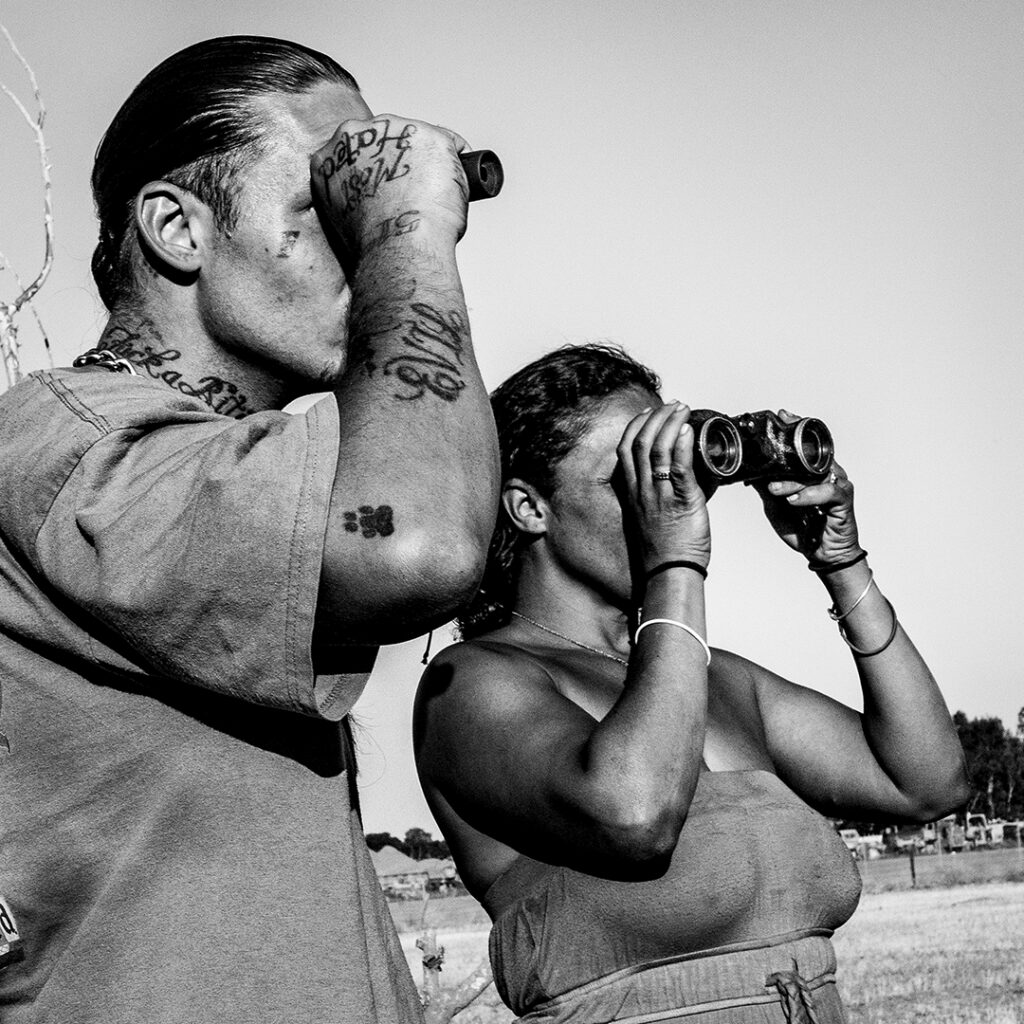
KM: Talk about American Geography in particular. There’s a premise: you drive around the country; it’s a road trip, which is a very classic thing in photography, but you set your route to actually only go through regions of the country that are classified as impoverished. And what’s interesting is that you actually create a map of the United States that isn’t the typical trade routes of commerce, like the cities and the industries, but you find a route that sticks to the back roads and to the poor regions of the country. Is that right?
MB: Yeah, it’s a road trip, in that I traveled. I did not at all think of it in that context as a storytelling thing. It’s a single story told over multiple locations. That’s how I approached this. And none of those things are on my mind, about whatever it might be the road trip trope. It was how many other places like mine were there that I could find, and could I articulate it in a way that felt true, true to my own experience as someone who is from a place like that, and be true to my background as a photographer.
KM: And do you find commonalities and differences, whether it’s Appalachia or California or Minnesota?
MB: Yes. And that was the thing. It wasn’t without discovery. It wasn’t like something that was thought up and done and it all fit together. I did not know, starting out, what I would find in these places. And maybe I would find, in fact, huge differences, huge distinctions that needed to be made. What I found experientially was the opposite, was the commonalities, where it felt like the same place. It felt like a complete extension of what I’d been photographing in California for so long, just with a different name attached to it, different geographic name. The same world. It felt to me like it rang true and felt true—that was the surprise. Even though we’re told all these reasons why places are the way they are, and why these places sit outside of America, why they are anomalies rather than commonalities, it was exactly the opposite. It was that there is this common thread and that …
KM: Common thread of the federal system, or even larger, the global capitalist system …
MB: Totally. But then we’ve all bought into these ideas. That’s the real story. Even the people on the losing end of the equation have a hard time rejecting these mythologies. “Oh, this is just the way it is and this is how it’s always been. Pull yourself together. Land of opportunity,” all those things. And this was the discovery. I did not go out to prove a thesis. This was something that evolved over the five years, six years of doing this. And that psychology at the end is what really interests me: the way these mythologies drive these narratives and these stories that are so powerful and so hard to change.
KM: Talk about this very traditional form of the photo essay. I noticed a lot of your work breaks out into stories or smaller stories or photo essays that have titles. Do those get organized after you’ve gone out and taken a body of work? Is it something you feel is happening as you’re doing it?
MB: No. It’s more of an organizing thread for myself. To me, photographs are always attached to ideas. They’re not constrained by those ideas; actually, just the opposite. It’s the initial idea that makes a space for these photos to emerge. But that initial idea is super important to me. If I don’t have that in my head, I don’t see pictures. I need to have that point of view, that framework to initiate the process. But beyond that process, I let the photographs do what they do and speak in the way they speak. And that’s the beauty of photography. I don’t interfere with that. But that initial, I guess, photo essay framework is my starting point, my mental framework.
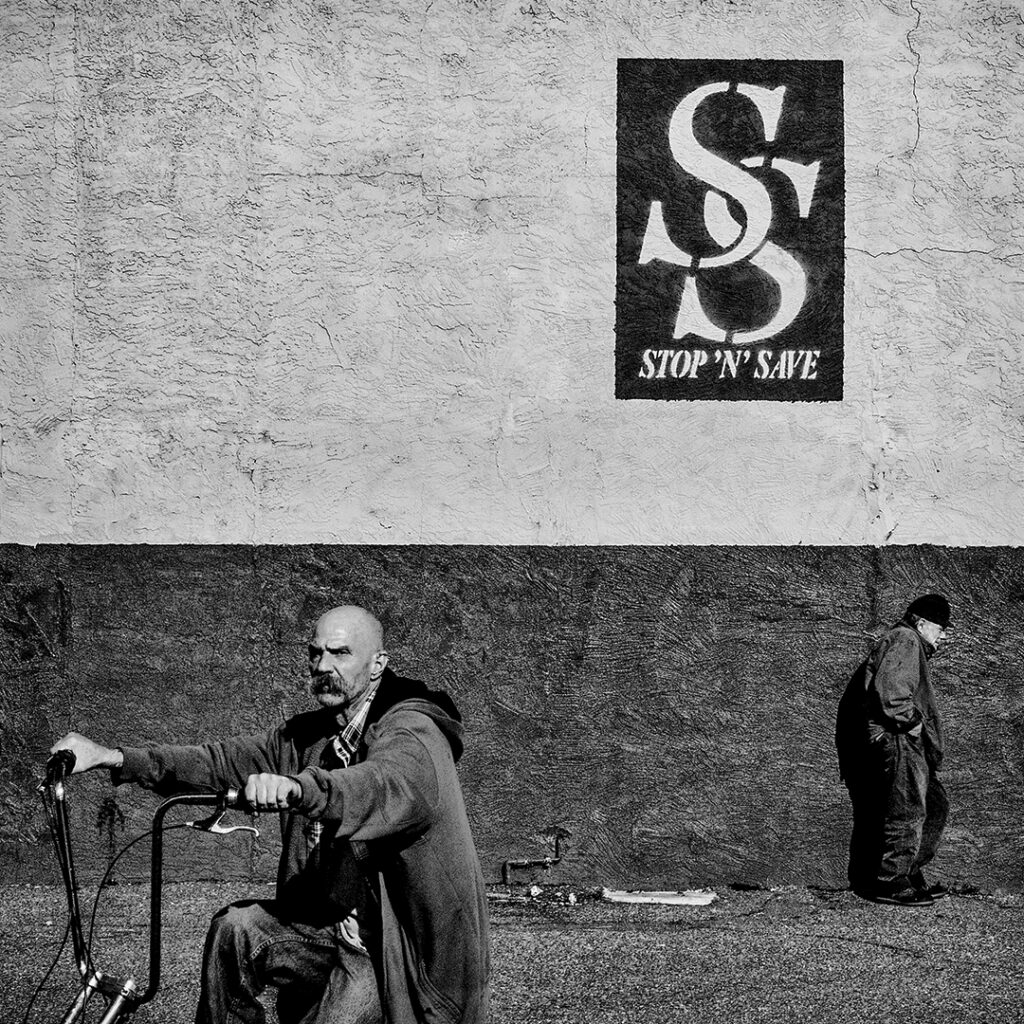
KM: A lot of your subjects are poor people. How do you maintain a sense of respect for who they are and the conditions they live in? Is there some intuitive guide you have for recognizing when your camera might be exploiting what it’s seeing in a way that could be used negatively? Can you soften what you’re seeing somehow, or do you even want to?
MB: It’s a 180 different perspective in terms of the way I’m framing it. Like any opposite, it’s equally true. But I’m coming at it from the other side, which is the starting point. The starting point is the place. The starting point is not the objectified relative poverty in those terms. The starting point is the place, and the place, yes, is full of poor people, but that place is also part of this idea of a country, of a common identity. So I’m starting from the point of view that I am a citizen of this country. Everyone I photograph is an equal citizen of this country. There are other citizens not pictured, but equally implicated in these realities. What you’re talking about in a visual sense or in a photographic sense, the way I approach it is, again, not in this objectified sense, but in an immersive sense. And we’re not excluding these areas from the country, which we have been very deliberately. Not just over time. Historically, there are all of these ways of saying why this place is an anomaly for X, Y, Z reason: the history of coal and Appalachia or industrial farming in California or the tortured history of the South. All of these reasons we have, but that’s ignoring the fact that here we are now. Today. And still this idea of trying to forge from this hugely complex mess of a country and a mess of an identity, what are still the common threads, the common realities, the common sense of identities that we have? I think when you look at the work and you look at the book that was produced, you’ll see that. A very strong sense of commonality, not difference. So that’s what drives me.
And in terms of the individual moments and interactions, all of these things are outgrowths of that starting point. And I don’t have rules for this and rules for that. It’s all coming from this idea of commonality and citizenship, and all of these things that we’re seeing now just being torn to shreds.
KM: I feel sometimes that we live in a culture that’s increasingly in denial about the consequences of our affluence. Just as people don’t want to see how the sausage is made and love to see it objectified, packaged in the grocery store, I think that they don’t really want to look at the social consequences of the affluence that many of us enjoy in this country.
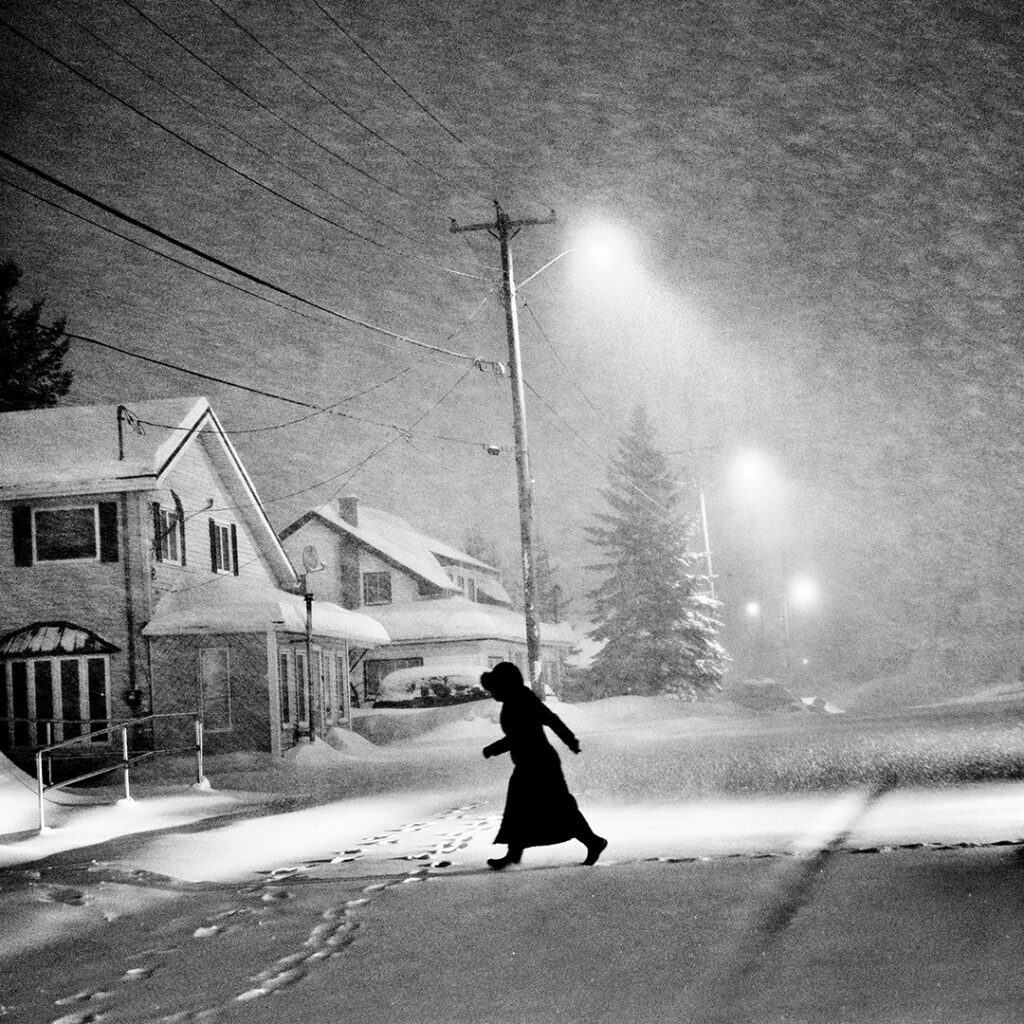
MB: But for any visitor to this country, it’s the first thing they see. The first thing they see is this immense division, but we put on these blinders and we justify it and we ignore it. This work, this project, American Geography was about tearing that apart, actually.
KM: Can we talk about Magnum a little bit? Magnum is this legendary organization that was established for photojournalism, reportage, or concerned photography, for making change—social change—in the world. Is it still the best organization you think for achieving those goals? Do you still feel that photography is impactful in the way you want it to be with so much other noise from social media and other media sources going on? It feels to me like some of that noble mission is being drowned out by other kinds of communications involving photography.
MB: Well, let me first start by saying that I’m talking to you now from a town of 200 people in the Central Valley of California, a very rural, remote, underprivileged area that I grew up in, and that’s home for me. I’ve made a commitment to that. So of course, yes, I’m a member of Magnum and I participate in that fully and I participate to the degree that I can in this broader idea of making culture and journalism and work, and contributing to national dialogues and debates. But my starting point is still trying to leverage where I’m coming from and what my perspective is. So it always feels awkward for me, honestly, to be a spokesman for anything beyond what I’m grounded in and what I know through my own work. So photography, yes, it’s changed. It’s changed incredibly, and my own work has changed along with it. We have all of these different channels and ways of reaching people. The traditional media is still there, but it’s barely hanging on.
But then on the other hand, the role of the gatekeeper has been greatly diminished and photography is certainly more accessible. And someone with a story to tell has a much higher chance of being able to tell that story now than any time in the past. So it’s just different. And for good and ill, all these forces are in motion and they look like they’re in motion, in my opinion, in a negative way. And now all of these channels are undergoing a process of being consolidated. What started off as maybe a democratic flowering is now becoming something much scarier and controlled by just a handful of companies and individuals.
KM: You mentioned the gatekeeper, and that’s a problematic thing. We’re gatekeepers ourselves in some ways. But with so many people now having direct access to platforms, instead of people in positions with judgment about what’s important or what’s worthy or noble for people to look at and think about, instead, it’s just a competition between who can be the loudest. And the loudest isn’t always the thing that people should be paying attention to, but unfortunately it ends up being that way.
MB: But to get back to your original question, and I’m not shirking it, the role of something like Magnum, to me, Magnum is about that tradition, about the tradition of using photography and this idea of finding the commonalities, finding the things that link us rather than separate us, finding the connections, which photography is an incredibly powerful medium for doing. So still, even though I think of myself as fully engaged and involved in the world now, those ideals are still very important to me.
KM: In some ways it’s all we’ve got, these kinds of institutions. Until something better replaces them, right now we’re looking at the threat of just them being eliminated entirely, and I don’t think that would be a good thing. I think what’s interesting about Magnum and institutions like it is that it does represent a larger, global ideal. Yet it also, paradoxically, supports people who are very local in what they do.
MB: And I think more than ever, particularly when you look at Magnum, it’s very much like that. Some of the most committed and engaged photographers are the people who are exactly that: hyper-local.
KM: That seems to me like a direction in general for the world. It’s like we need to be global citizens, but also be local in how we consume, barter, whatever it is culturally, whatever we do.