About the Biennial
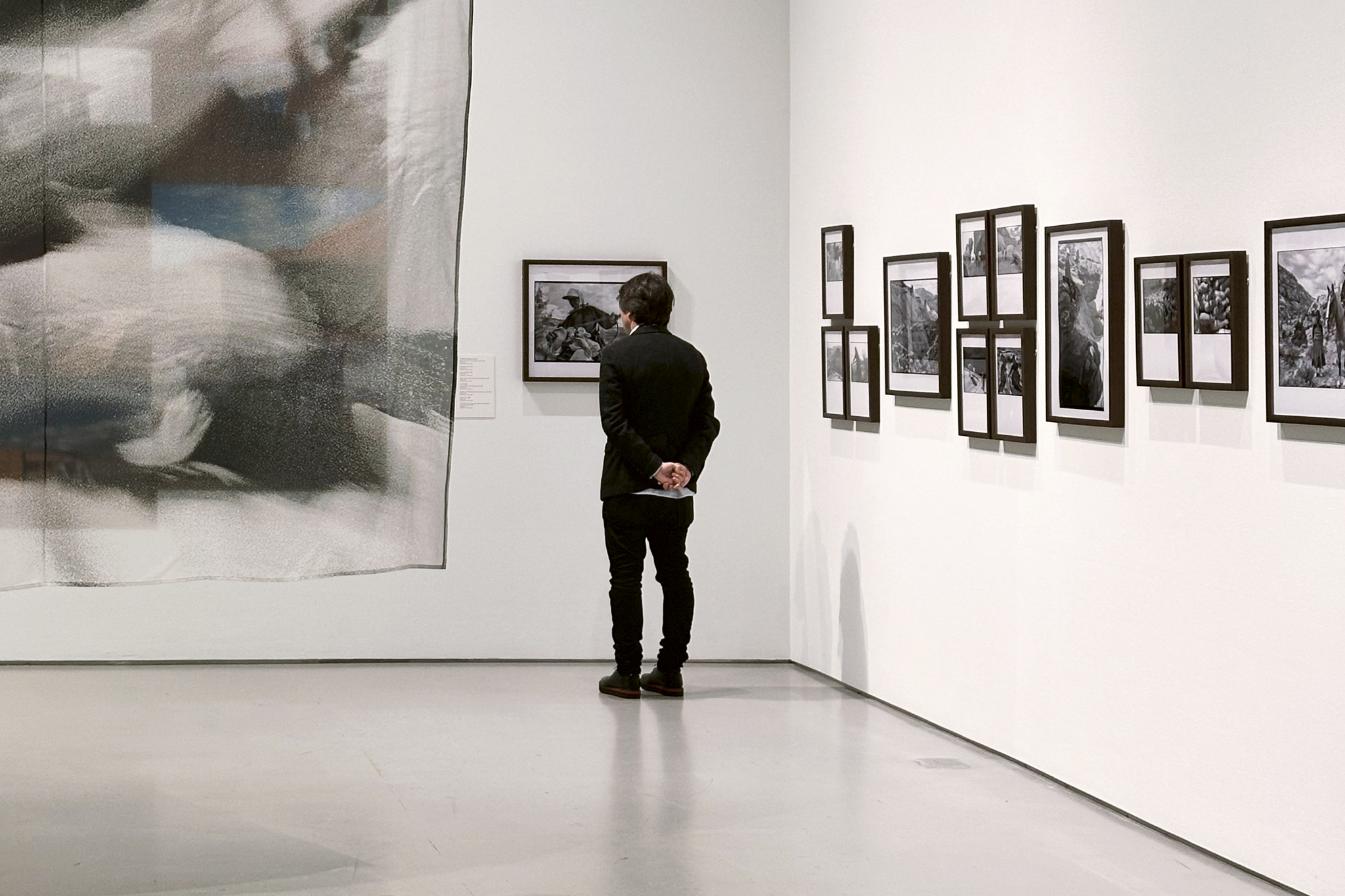
The largest of its kind in America, the Biennial is a month-long celebration of photography and lens-based art. Launched in October 2012, the Biennial is held throughout the Greater Cincinnati, Dayton, Columbus, and Northern Kentucky region every two years. Over 3,500 artists and participants have been featured in more than 800 exhibitions and programs throughout its history. Each iteration centers around a unifying theme and is realized through the cooperation of museums, galleries, universities, and alternative spaces that connect artists, curators, and creatives. Cumulatively, the Biennial has welcomed over one million visitors since its inception.
The Biennial Opening Program features special events and programs, establishing the theme and dialogues that unite the broader programming. Biennial Events continue at venues throughout the month and include artist and curator talks, tours, performances, screenings, and receptions.
Theme
Each Biennial is structured around a unifying theme. The 2026 Biennial theme, The Long View, considers aspects of time and perspective in photography and film, and how these mediums shape our understanding of the world. “The long view” is a phrase used to invoke a broader perspective. It suggests both distance and duration, i.e., looking far into the distance and/or looking for a long period of time. As an attitude toward history, the long view suggests a wise and measured perspective, one that takes into consideration the distant past as well as the distant future. The long view also describes in literal terms two primary functions of photography: photographic lenses enable both long-distance vision and long-duration viewing.
The Long View acknowledges the semiquincentennial of the United States, encouraging a posture of reflection in regards to the grand sweep of our country’s history, its past, present, and future. Photography can show us many moments from that history but it can also serve as a metaphor for how we understand our past and decide to shape it over time.
Director’s Statement
Welcome to the 2026 Biennial, the eighth iteration of this ambitious endeavor. Joined by 65 venues featuring 74 exhibitions, the festival celebrates the power of photography to catalyze conversations that inspire and challenge in equal measure. Projects are connected through this year’s theme, The Long View, which considers aspects of time, perspective, and the role of lens-based media in shaping our understanding of the world. Nestled within a year meant to celebrate the 250th anniversary of a country founded on democratic ideals of life, liberty, and the pursuit of happiness, The Long View asks us to consider all the factors—large and small—that led us here, and how we can shape our collective future by our actions today.
Often, history is defined within narrow constructs, reduced to a chronological list of dates, events, victories, and related outcomes. However, there are a range of philosophical inquiries into history, and its related discipline, time, many of which reject linear progressions or superficial cause and effects. French theorist Fernand Braudel developed longue durée, an approach which examines intersectionality of various studies (be it social, economic, environmental, etc.) across expansive degrees of time. What changes in our understanding of the world when we move past the breaking news headlines and instead consider the myriad of decisions, shifts, and seemingly unrelated factors across epochs that led to the present moment?
Similarly, photography is generally discussed as an instantaneous act: a fraction of a moment frozen in perpetuity. But how can photography help us recontextualize the past and imagine the future? The photographic and lens-based projects featured in this year’s Biennial consider The Long View through a unique range of perspectives. Some exhibitions have historical roots, featuring the work of pioneers of photography like James Presley Ball and Alexander S. Thomas, or take a retrospective look at the careers of women photographers such as Nancy Rexroth and Edie McKee Harper. Others embrace futurism, using the lens as a tool to speculate what is on the horizon. Still others remain rooted in the present, addressing ideology, politics, and culture in America and around the world. Together, the artists featured this year explore issues of identity, aging, memory, community, diaspora, queer perspectives, and many more.
This year also marks the first iteration of the Biennial to feature an exhibition at FotoFocus Center, a 14,700 square foot purpose-built space to house photographic exhibitions and programs year-round. Trevor Paglen’s solo exhibition, the most merciful thing in the world, spans across both galleries and exemplifies how taking a broader perspective, either figuratively or through the literal expansion of a composition, can reframe our understanding of modern life and uncover hidden structures.
Since 2012, the Biennial has brought together the region’s arts organizations to champion photography as the medium of our time. A “long view” of the Biennial’s history reveals that the collaboration of venues, artists, and participants has been critical to getting FotoFocus where we are today, and we thank you all for your steadfast support of this organization and commitment to photographic projects and inquiry. I hope you find this year’s Biennial eye-opening, expansive, and impactful.
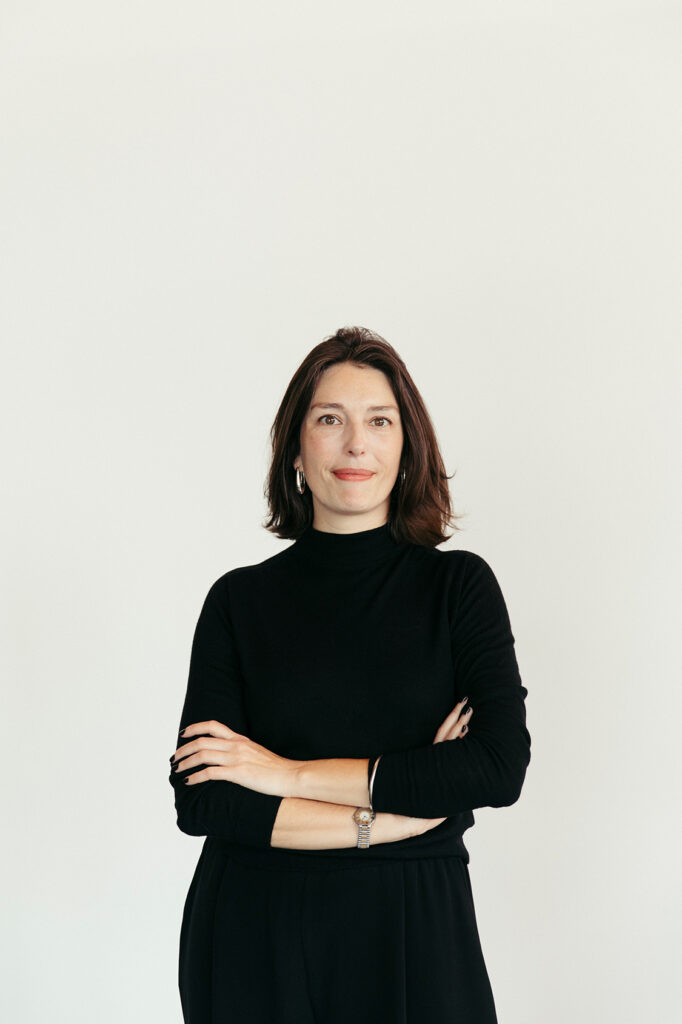
Katherine Ryckman Siegwarth, Executive Director
Curator’s Statement
This year’s theme, The Long View, emerged primarily out of the United States’ 250-year anniversary. Such a milestone invites reflection, calling to mind the title of one of Paul Gauguin’s most famous paintings: “Where Do We Come From? What Are We? Where Are We Going?” The Long View invites us to look in all directions—both in terms of geography, near and far, and in terms of time, past and future.
Responses to The Long View have been exceptionally philosophical, speculative, and ambitiously far-reaching. Many projects look to the distant past, such as the Cincinnati Museum Center’s exhibition of studio portraits by James Presley Ball and Alexander S. Thomas. Looking for Japan (Dayton Art Institute) focuses on early photography in Japan, as the country was opening its borders to the West and, subsequently, global trade. Several shows focus on 20th-century figures with lasting influence, such as Edie McKee Harper, whose multi-media practice presaged today’s environmentalist efforts (Taft Museum of Art); fashion editor and photographer Alexander Liberman, whose work redefined American magazines during his 30-year career at Condé-Nast (Pyramid Hill Sculpture Park & Museum); and civil rights photographer Matt Herron, whose documentation of the historic Selma to Montgomery March for Voting Rights contributed to passage of the Voting Rights Act of 1965 (National Underground Railroad Freedom Center). Other exhibitions offer a long view across a span of historic and contemporary work, such as Queer Constellations at the Columbus Museum of Art, which tracks decades of photography by queer artists; and Stacy Kranitz: Ain’t No Grave Gonna Hold My Body Down at the Contemporary Dayton, which includes historic images of Appalachia alongside Kranitz’s recent work.
Personal histories, or those of others, recorded over time, emerge as another angle on the theme. Paul Sepuya’s elegant, erotic, puzzle-like self-portraits, often including others, hint at complex, evolving personal relationships (Alice F. and Harris K. Weston Art Gallery). Nancy Rexroth’s retrospective at the Cincinnati Art Museum presents an archival view of the artist’s Midwestern life, spanning over half a century. Cuban-born Juan-Sí González offers a series of “mental landscapes” found in abandoned places where vestiges of past cultural histories can be found (Annex Gallery). And The Long Lives We Carry, a collaborative series by Gordon Baer and Jano Rečo, examines the process of aging and dying in a culture that tends to sequester the elderly (Clifton Cultural Arts Center).
Numerous exhibitions entertain questions of geologic time, encompassing themes of nature and technology. Trevor Paglen’s solo exhibition at FotoFocus Center scours landscapes and the cosmos for signs—often hidden from photographic technologies—of power and surveillance. Natural Fictions at The Carnegie takes a slow look at nature, imagining new and transformative relationships through fiction and play. A more scientific approach is taken in This Land/Here We Dwell (Northern Kentucky University), in which artists examine environmental sites over time. Congolese artist Sammy Baloji’s solo exhibition at the Wexner Center for the Arts documents the lasting impacts of resource extraction on the land and its people.
There are numerous open call exhibitions, emphasizing FotoFocus’s ongoing commitment to regional artists, notably, In the Interest of Time at the Contemporary Arts Center. Other group exhibitions embracing themes of time include: Luminous Flow (Dayton Society of Artists); Wayfarers (Delhi Event Center); and Milestones: Finding Our Way (Fitton Center for Creative Arts). Several group exhibitions gaze intently into the future, such as Long Exposure, an exhibition of alumni, at DAAP Galleries:: Reed Gallery; and Haunting at Columbus College of Art and Design: Beeler Gallery. The long view into the future is especially present in the various exhibitions highlighting the work of youth photographers and students: Sense of Tomorrow, led by HATSUE (Artworks/1001 Colors Gallery); True Body Project: Time is a Circle (The Well); and The Places We Keep (Manifest Drawing Center). Each of these exhibitions encourages students to think about their world—their pasts and futures—through photography.
Finally, what would a big national birthday be without some reflection on the current political moment? Accra Shepp’s decades-long coverage of news events, from protests to pandemics to labor histories, provides a window into recent social unrest (Art Academy of Cincinnati: SITE1212). Palestinian-American artist Noel Maghathe explores her heritage and connections to her homeland, invoking memory through photography (Art Academy of Cincinnati: McClure Gallery). Similarly, Widline Cadet reflects on her Haitian ancestry through portraiture of Black diasporic life in the United States (Contemporary Arts Center). And Jon Yamashiro revisits Japanese internment camps, mostly located in the American West, where more than 100,000 Japanese Americans were held during the Second World War (Oxford Community Arts Center).
Projects such as these remind us that however far we have come as a nation, there is still a long way to go.
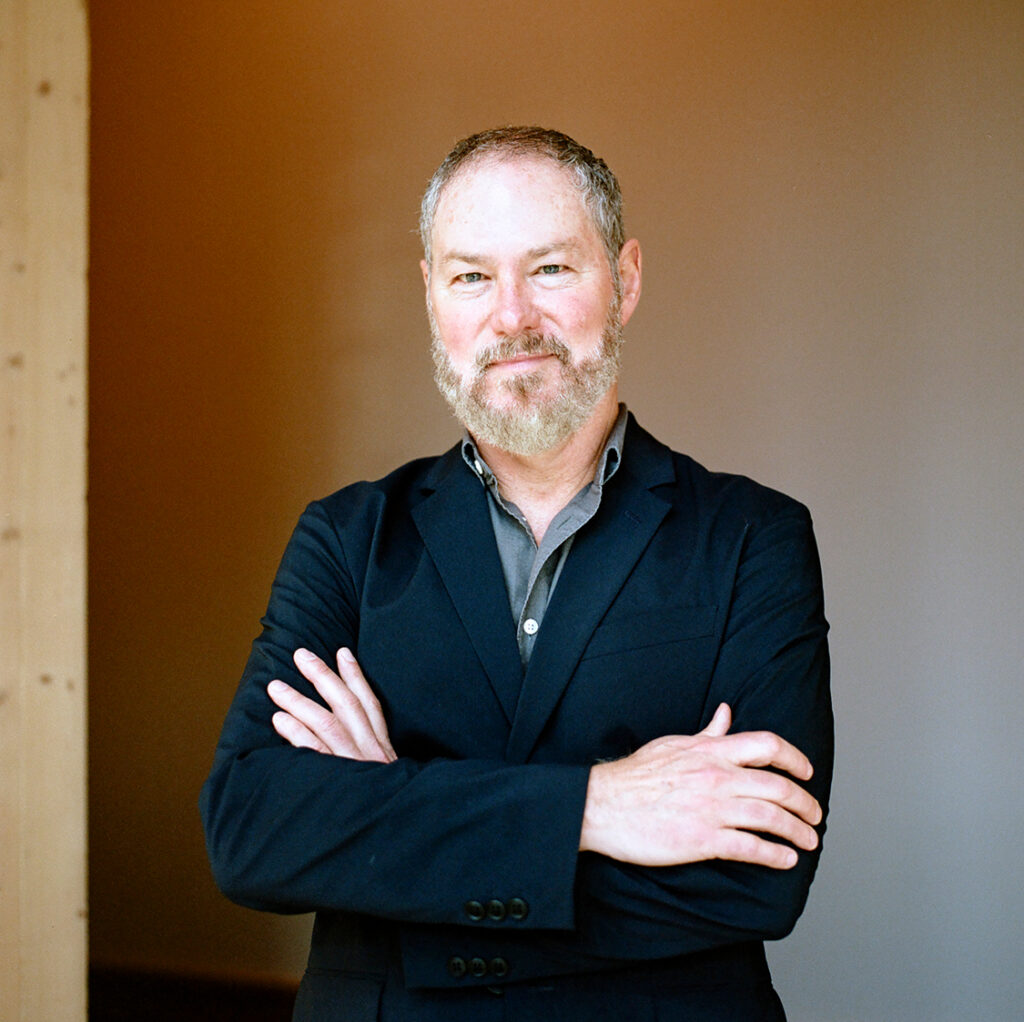
Kevin Moore, Artistic Director and Curator
Biennial History
The largest of its kind in America, the Biennial is a month-long celebration of photography and lens-based art. Launched in October 2012, the Biennial is held throughout the Greater Cincinnati, Dayton, Columbus, and Northern Kentucky region every two years. Over 3,500 artists and participants have been featured in more than 800 exhibitions and programs throughout its history. Each iteration centers around a unifying theme and is realized through the cooperation of museums, galleries, universities, and other alternative spaces that connect artists, curators, and creatives. Cumulatively, the Biennial has welcomed over one million visitors since its inception.
The Biennial Opening Program features special events and programs, establishing the theme and dialogues that unite the broader programming. Biennial Events continue at venues throughout the month and include artist and curator talks, tours, performances, screenings, and receptions.
2024 Biennial: backstories
Encompassing more than 100 projects at over 80 Participating Venues with 15 Featured Projects, backstories focused on stories not evident at first glance, offering context for what happened previously or out of view, providing narratives not yet told or presented from a new perspective.
2022 Biennial: World Record
The sixth iteration presented major new artist commissions and a wide range of original exhibitions and events, featuring over 100 projects centered around the theme of World Record. The theme considered photography’s extensive record of life on earth, humankind’s impact on the natural world, and the choices we now face as a global community.
2020 Biennial: light&
In lieu of presenting the fifth Biennial, FotoFocus pledged its 2020 Biennial budget to financially support the region’s art community during the COVID-19 pandemic. FotoFocus distributed Emergency Art Grants to over 100 Participating Venues and Partners that were selected to present as part of the Biennial.
2018 Biennial: Open Archive
Featuring 90 Biennial projects and a comprehensive film program, Open Archive emphasized the centrality of photography and lens-based art to modernism, and examined our fundamental need to preserve photographs and to tell stories through their collection, organization, and interpretation.
2016 Biennial: Photography, the Undocument
The third Biennial included eight major exhibitions exploring the documentary nature of photography, and featured over 60 exhibitions and more than 100 events. Venues took diverse approaches to the theme, breaking apart assumptions about photography’s documentary character by emphasizing the medium’s natural tendency to distort and reshape the visible world.
2014 Biennial: Photography in Dialogue
The second edition included six original exhibitions and the premiere of the ArtHub, as well as exhibitions by over 60 Participating Venues. The Biennial Program included five days of lectures, panel discussions, screenings, and performances with curators, critics, and art world professionals, all focused on one common theme: Photography in Dialogue.
2012 Biennial: People. Places. Photography.
In October 2012, the Biennial became the region’s first event to bring together over 60 venues to simultaneously present contemporary and historical photography, as well as artistic and educational programing.
Sponsors
Programmatic Support

Partners



#FotoFocus #TheLongView #FotoFocus2026